ATTIC VENTILATION & ROOF REPLACEMENT
New shingles do not correct trapped heat, attic moisture, blocked intake, unbalanced exhaust, or bathroom fans terminating into the attic. Roof replacement is the right time to evaluate how air and moisture actually move through the roofing system.
THE ARMOR WAY
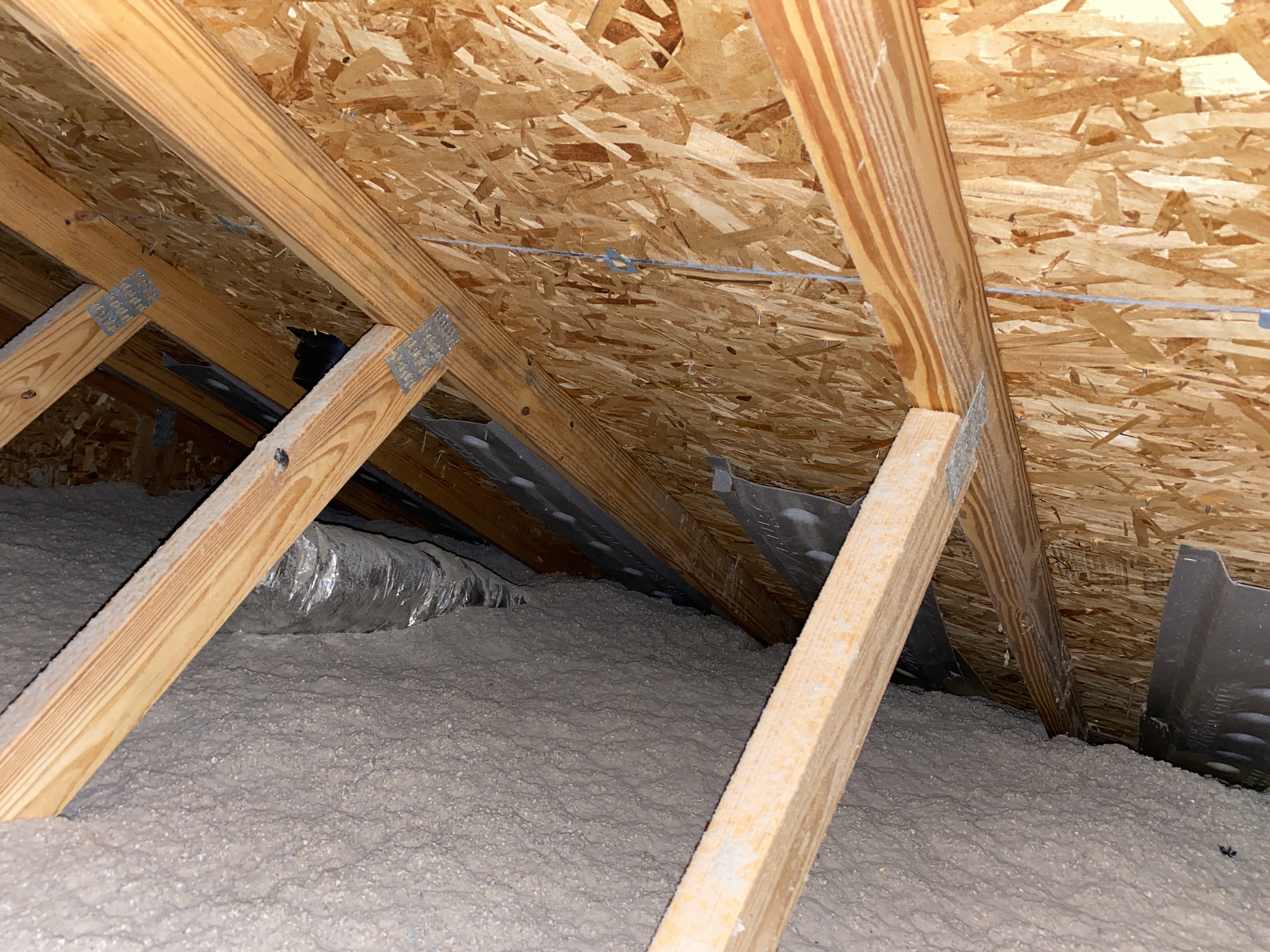
A healthy attic needs a designed path for outside air to enter low at the eaves and exit high near the roof peak. Adding exhaust without adequate intake can leave the system unbalanced, while blocked soffits or insulation can prevent intake air from reaching the attic at all.
When the attic is accessible, Armor looks at intake, exhaust, baffles, insulation, moisture staining, deck condition, and where bathroom or other mechanical exhaust terminates before recommending a ventilation change.
A ROOF IS A SYSTEM
Decking. Underlayment. Fasteners. Flashing. Roof edges. Valleys. Penetrations. Intake and exhaust ventilation. Starter. Ridge cap. Installation details.
We don’t just choose a shingle. We design the roofing system around the home.
BALANCED VENTILATION
Good ventilation is not simply adding more vents. The intake, exhaust, and moisture sources inside the attic have to be considered together.
01
Air has to enter before it can exhaust
Soffit vents, intake products, and clear air paths at the eaves bring outside air into the attic. Painted-over soffits, insulation, missing baffles, or inadequate intake area can restrict that airflow.
Start With an Attic Inspection →02
High exhaust only works with enough intake
Ridge vents, box vents, and other exhaust methods allow warm, moisture-laden attic air to leave. The exhaust type and amount should be matched to the available intake instead of added independently.
See the Roof Replacement System →03
Ventilation cannot fix every moisture problem
Bathroom fans, dryer exhaust, air leakage, plumbing issues, and other moisture sources can load the attic with humidity. Those sources should be corrected rather than asking roof vents to compensate for them.
Schedule a Roof Inspection →
ROOFING SYSTEM DESIGN
The goal is not simply to install the maximum amount of exhaust. Outside air needs a clear path into the attic at the eaves, movement through the attic space, and a designed exit near the high point of the roof. The intake and exhaust capacity should work together.
A ventilation product is only useful when the rest of the air path allows it to work.
BUILT FOR THE COAST
The Mississippi Gulf Coast combines long periods of heat with high outdoor humidity and strong sun exposure. That makes attic airflow, moisture control, insulation boundaries, and mechanical exhaust termination important parts of a roof replacement inspection.
Solar heat can drive attic temperatures well above outdoor conditions. Ventilation is one part of managing that heat, alongside insulation, air sealing, and the overall roof assembly.
Moisture can condense on cooler surfaces or collect where air movement is poor. Staining, damp decking, corrosion, or mold-like growth are reasons to investigate the attic before covering the roof with new materials.
Soffit vents can exist and still fail to deliver air if insulation, framing, paint, debris, or missing baffles block the path between the exterior intake and the attic.
The underside of the roof deck, rafters, insulation, baffles, fasteners, and exhaust ducts can reveal conditions that are invisible from the roof surface.
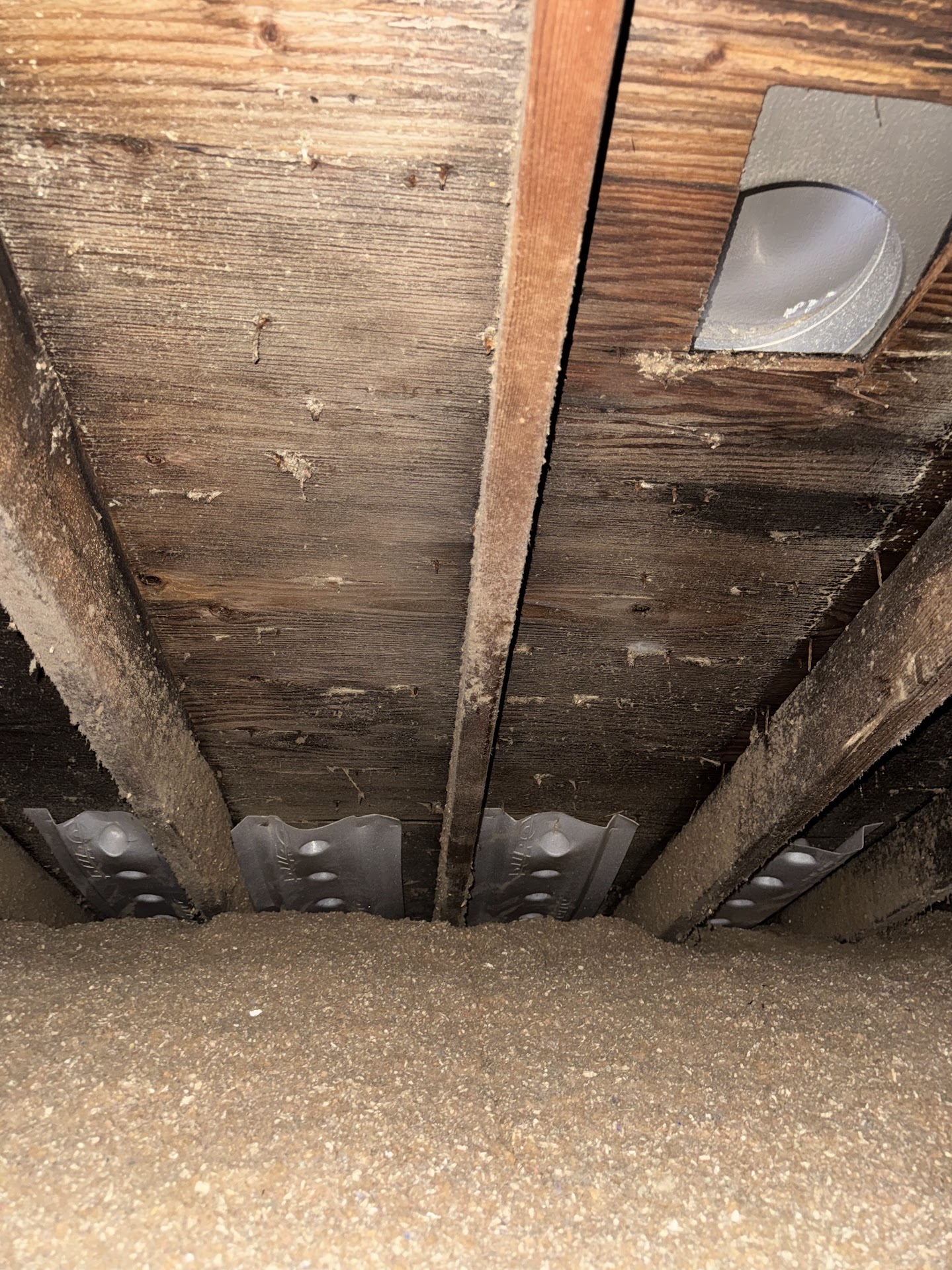
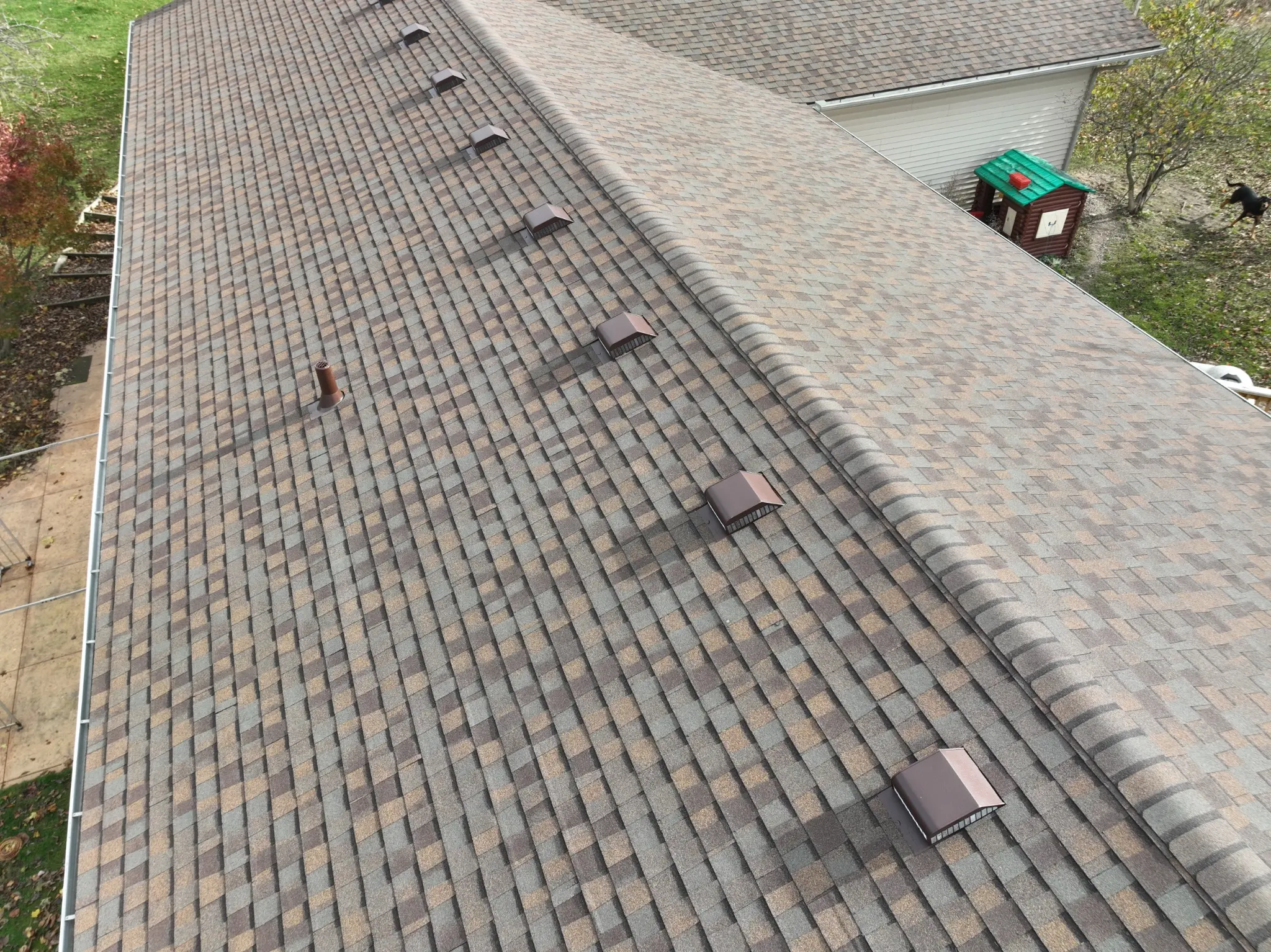
That is why an accessible attic is part of the Armor inspection whenever possible. Ventilation, moisture, exhaust termination, insulation, and the underside of the roof deck can explain problems the shingles alone cannot.
RESILIENCE UPGRADE
FORTIFIED roofing focuses on resilience details such as deck attachment, sealed roof deck, roof edges, flashing, and penetrations. Attic ventilation addresses airflow and moisture management. One does not replace the other.
When a roof is being replaced, both conversations can happen at the same time: build the exterior roof for severe weather and make sure the attic conditions beneath it are not being ignored.
WHY IT BELONGS IN THE CONVERSATION
A roof is a system.
Details matter.
Preparation matters.
What happens underneath the shingles matters.
Your best defense starts long before the storm is in the forecast.
THE ARMOR INSPECTION
When access allows, the attic inspection looks at the underside of the roof deck, moisture staining, condensation, intake paths, exhaust configuration, baffles, insulation placement, and where bathroom or other exhaust ducts terminate.
The roof speaks. The attic tells the truth.
The goal is not to sell more vents. It is to understand the attic well enough to recommend the ventilation work the home actually needs.
REAL WORK. REAL HOMES. REAL DETAILS.
A finished-roof photo only tells part of the story. Armor project case studies are built to show what we found, why we recommended the work, the roofing system and materials selected, installation details, and the finished result.
Until Gulf Coast projects are completed, selected work from Armor's Michigan operation will be shown clearly as established company experience. We will not manufacture local projects just to fill a page.
ATTIC VENTILATION QUESTIONS
Ventilation works best when the whole attic is evaluated instead of treating each vent as an isolated product.
More exhaust is not automatically better. If the attic lacks enough intake, additional exhaust can leave the system unbalanced and may pull air from unintended places instead of through the soffits.
A ridge vent needs a reliable source of low intake air. If soffit vents are missing, blocked, or too limited, the ridge vent cannot create the intended low-to-high airflow path.
No. Bathroom exhaust should terminate outside the building. Dumping warm, moisture-laden air into the attic can create condensation and moisture problems that roof ventilation alone is not designed to solve.
Yes when the existing system is inadequate or poorly configured. Replacement provides access to ridge, roof-deck, edge, and intake details that can be difficult or inefficient to correct later.
COMMON VENTILATION FAILURES
Many attic problems are not caused by a lack of roof vents alone. The real issue is often a blocked air path, mismatched intake and exhaust, or moisture entering from inside the home.
01
The vent exists, but the attic cannot use it
Insulation packed into the eaves, missing baffles, painted-over soffits, or obstructed vent openings can reduce intake even when the exterior appears to have plenty of soffit ventilation.
02
More exhaust openings do not always mean better airflow
Ridge vents, box vents, turbines, or powered exhaust can interact in ways that short-circuit the intended airflow path. The exhaust strategy should be designed as one system.
03
Mechanical moisture is not a roof-vent problem
Bathroom exhaust terminating in the attic can introduce large amounts of warm, humid air directly beneath the roof deck. The correct fix is proper exterior termination, not simply adding more roof vents.
04
A ridge vent upgrade can still leave the attic unbalanced
Before changing the exhaust method during reroofing, the available intake area and air path should be confirmed so the new system has a reliable source of replacement air.
WHAT HOMEOWNERS SAY ABOUT ARMOR
Armor Roofing Gulf Coast is new to Mississippi, but the standards behind the company are not. Until local Gulf Coast reviews begin coming in, selected feedback from Armor's Michigan operation shows the kind of communication, inspection, problem-solving, and workmanship the company is built around.
LEAH | ARMOR ROOFING CUSTOMER | MICHIGAN
“He was quick, honest, and very thorough. He took his time to explain our options. I felt comfortable knowing I would receive high quality work, and that's exactly what Paul and his team at Armor Roofing delivered.”
“I would recommend Paul to any of my friends and family.”
START WITH AN INSPECTION
If you are wondering whether it is time for a new roof, Armor starts by evaluating the roofing system you already have, including attic conditions when accessible, ventilation, flashing, penetrations, decking, and the condition of the roof.
You get the facts. We give you our recommendation. You make the decision.
ARMOR ROOFING GULF COAST
Armor Roofing Gulf Coast evaluates attic conditions when accessible so ventilation, moisture, and exhaust issues can be addressed as part of the roof-replacement decision.