
GULF COAST HOMEOWNER GUIDE | HURRICANE PREPAREDNESS
Mississippi Gulf Coast Hurricane Preparedness Checklist
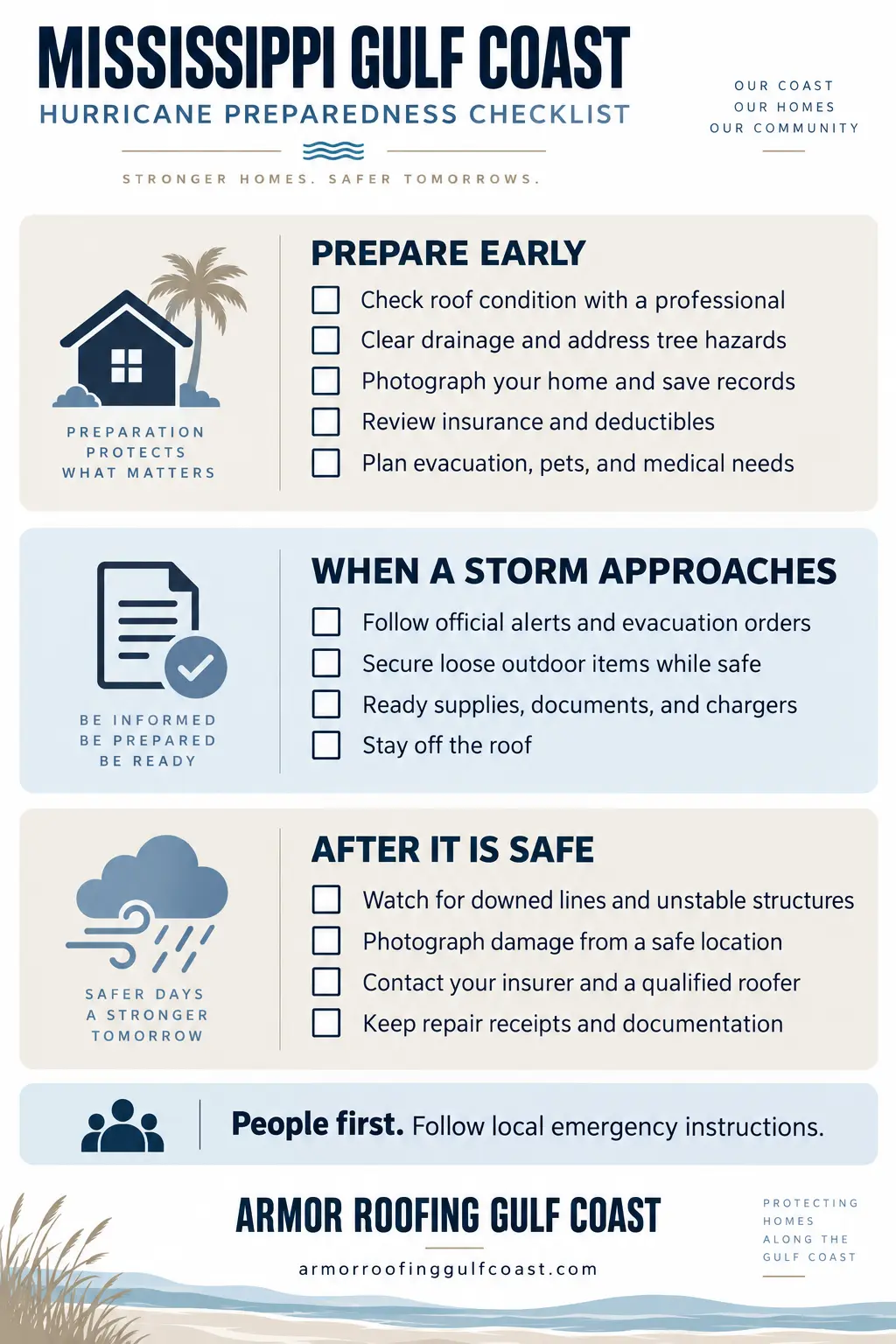
Prepare the roof and home early, document their condition, review your insurance, and make a household evacuation plan. When a storm approaches, follow local emergency instructions and put people first.
Use this checklist before hurricane season and revisit it when a storm threatens. It supports your household plan; it does not replace official evacuation or emergency guidance.

STAGE 1
Prepare early, while you have options
01
Check the roof’s condition. Arrange a professional inspection for existing leaks, loose or missing materials, flashing concerns, or an uncertain roof. Ask for photographs and a clear explanation of necessary repairs. A hurricane forecast alone is not a reason to replace a serviceable roof.
02
Clear drainage and address tree hazards. Have gutters and downspouts cleared and damaged overhanging limbs evaluated during safe weather. Leave elevated work and hazardous tree removal to qualified professionals.
03
Record the home before a storm. Photograph accessible exterior areas from the ground and make an indoor inventory. Save dated copies, roof records, warranties, and receipts somewhere you can access if you evacuate.
04
Review coverage with your insurance agent. Ask about wind, named-storm deductibles, flood coverage, and claim contacts. Confirm what your own policy covers and what your deductible means in dollars.
05
Plan for everyone in the household. Know your evacuation zone, route, destination, and communication plan. Include pets, medications, mobility needs, and power-dependent medical equipment.
STAGE 2
When a storm approaches
01
Follow official updates. Use MEMA, the National Weather Service, and local emergency management. Evacuate when directed; do not delay to finish roof work.
02
Secure loose outdoor items while conditions are safe. Bring in furniture and other windborne-debris hazards. Use your planned window-protection system.
03
Ready supplies and records. Check food, water, medication, flashlights, batteries, phone charging, pet supplies, and important documents. Keep insurer and contractor contacts available offline.
04
Stop elevated work before conditions deteriorate. Do not climb onto the roof to inspect, repair, or install a tarp as the storm arrives. A rushed roof replacement is not a substitute for an emergency plan.
STAGE 3
After officials say it is safe
01
Look from a safe location. Stay away from downed lines, floodwater, unstable trees, and damaged structures. Do not climb onto a storm-damaged roof.
02
Document visible damage. Take photographs only where safe. Contact your insurer promptly about reporting requirements and arrange a professional roof assessment.
03
Keep a record of temporary protection. Use qualified help for emergency roof work and retain photographs, invoices, and receipts. Ask your insurer about required documentation; a contractor cannot guarantee coverage.
KEEP YOUR PLAN ACCESSIBLE
Keep these details with your plan
Evacuation destination · Household contact · Insurance company and policy number · Roof inspection date · Necessary repairs and completion date
Related roofing questions
Should I replace my roof before hurricane season?
OFFICIAL PREPARATION RESOURCES
Follow local emergency instructions.
Use official forecasts and evacuation guidance when making safety decisions.
MEMA: hurricane preparation and county evacuation resources · National Weather Service: prepare before a hurricane · Mississippi Insurance Department: consumer hurricane checklist
THE ARMOR APPROACH
Know what your roof needs before the forecast changes
Armor starts with the condition of your roof, documents the findings, and explains your options.
ARMOR ROOFING GULF COAST
People first. Preparation early.
Facts first. Recommendations second. Decisions last.