
SEALED ROOF DECK | FORTIFIED ROOFING
A sealed roof deck is a backup water-control layer designed to help limit water entry through roof-deck seams if shingles or another roof covering are damaged or removed during severe weather. It is one of the core resilience details in the FORTIFIED Roof standard.

WHY THE SEALED DECK EXISTS
Roof decking is installed in panels or boards with joints between them. If wind damages the roof covering and exposes the deck, rain can reach those seams and enter the attic or living space below.
A compliant sealed-roof-deck method creates a backup water-control layer over those vulnerable joints. It does not make the roof indestructible, but it can help reduce water intrusion after cover loss.
THE SHINGLE IS THE FIRST LINE OF DEFENSE
Roof covering. Underlayment or sealed-deck system. Roof deck. Attic. Interior. Each layer has a job, and the backup water-control layer becomes especially important if the covering is compromised.
Resilience is about what happens when the first layer does not remain intact.
THREE THINGS TO UNDERSTAND
The sealed deck is important, but it should be understood as one part of a complete roof system rather than a stand-alone promise.
01
The joints are vulnerable after cover loss
A compliant sealed-deck method is designed to keep wind-driven rain from moving directly through the joints between roof-deck panels when the roof covering is no longer protecting them.
See the Full FORTIFIED System →02
The roof covering still has the primary job
The sealed roof deck does not eliminate the need for a correctly installed roof covering, flashing, penetrations, edges, and other water-shedding details. It is a secondary layer for a failure scenario.
FORTIFIED vs. Minimum Code →03
The deck is accessible before the new covering goes on
Roof replacement creates the practical opportunity to inspect the deck, address attachment, install the selected compliant sealed-deck method, document it, and then build the rest of the roof over it.
See What the Upgrade Can Cost →THE FORTIFIED ROOF SYSTEM
It works with deck attachment, roof covering, starter, roof edges, flashing, penetrations, vents, and other components. Its job becomes critical only when the primary weather-shedding layers above it have been compromised.
It is one layer in a resilient roof system, not a replacement for the rest of the system.
WHY IT MATTERS HERE
On the Mississippi Gulf Coast, severe wind can damage roof coverings while rain continues to push against the building. A sealed roof deck is intended to reduce one major path for that water to enter once the covering is compromised.
The roof deck and roof edges have to resist forces trying to pull the assembly apart. Attachment patterns, fasteners, starter, and edge details all matter.
If shingles are damaged or removed by wind, the sealed roof deck becomes the backup water-control layer that helps protect the interior through the deck seams.
Roof coverings, fasteners, vents, flashing, and other components have to be selected and installed for the site's wind exposure and applicable corrosion requirements.
Existing decking, framing, roof geometry, penetrations, ventilation, and prior work can affect the practical scope. FORTIFIED does not eliminate the need to understand the house first.
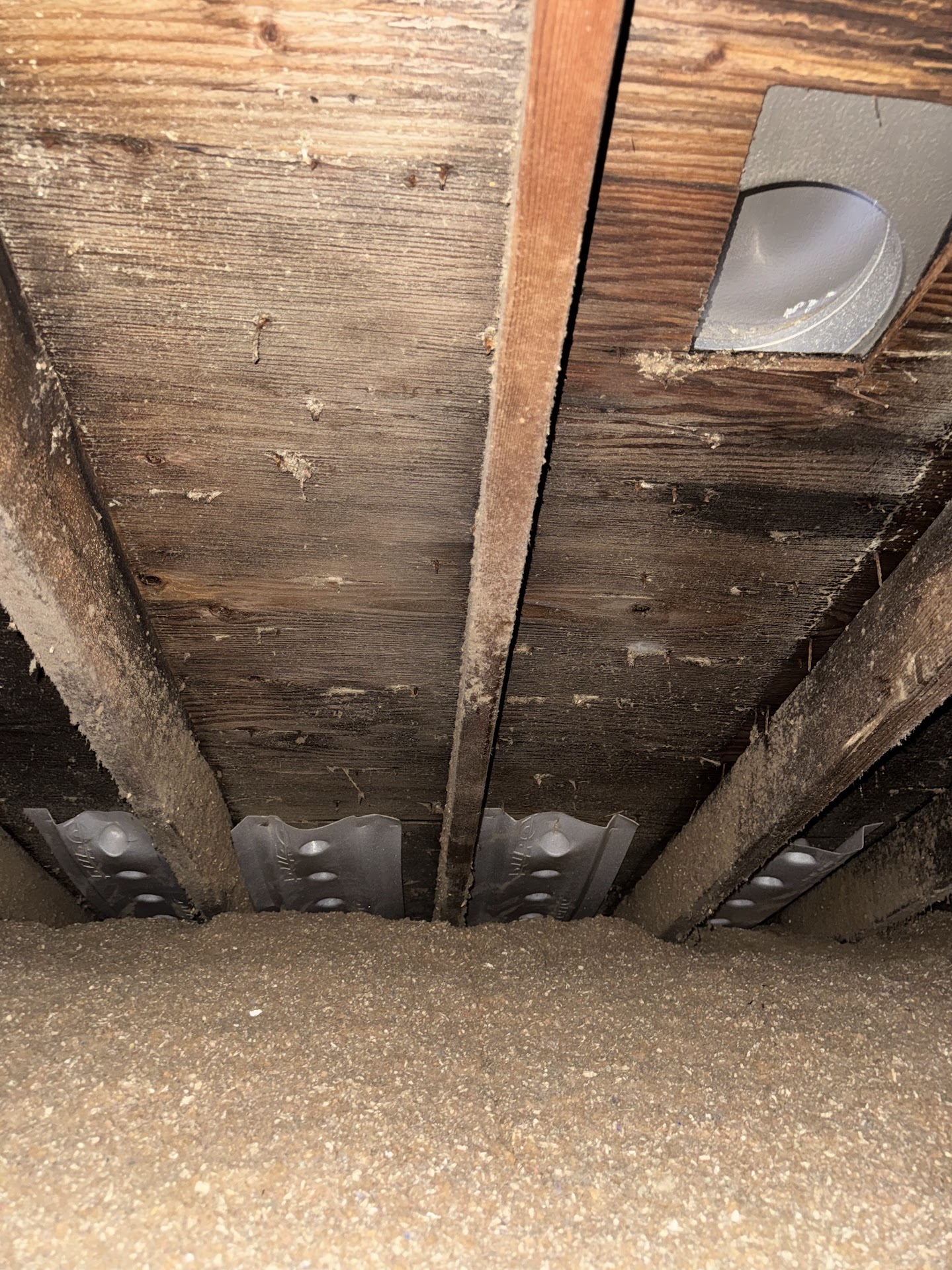
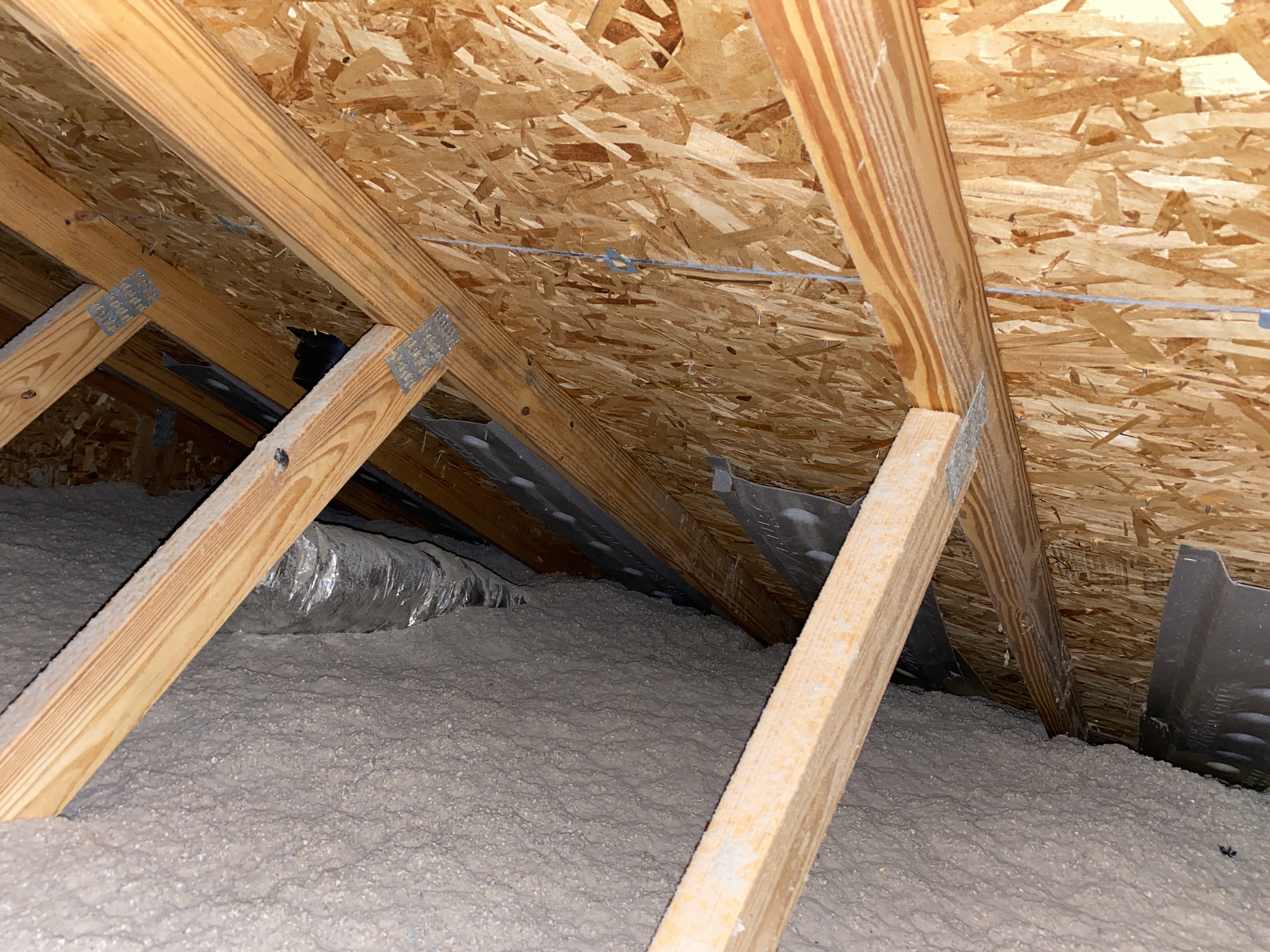
When accessible, the attic helps Armor evaluate the underside of the roof deck, framing, ventilation, moisture, and existing conditions before a FORTIFIED scope is recommended.
FORTIFIED DOCUMENTATION
For a FORTIFIED designation, the project must use an applicable compliant sealed-roof-deck method and the required evidence has to be captured while the work is visible.
That is why evaluator coordination and production planning have to happen before critical layers are covered by the finished roof.
WHAT HAS TO HAPPEN
Evaluate the home and roofing scope before work begins.
Coordinate the independent FORTIFIED evaluator.
Install the roof to the current applicable FORTIFIED standard.
Capture the required documentation as the work is installed.
The designation depends on both compliant construction and independent verification.
BEFORE THE DECK IS SEALED
A sealed roof deck should not hide a problem that belongs in the repair scope. Deck condition, attachment, damaged or deteriorated areas, roof geometry, penetrations, and transitions all have to be understood before the backup water-control layer is installed.
The standard is specific. The house is specific too.
Inspect the deck. Correct what needs correction. Then build the resilience layer.
SEALED ROOF DECK QUESTIONS
A sealed roof deck is simple in purpose but specific in execution. These are the questions that matter most when comparing a standard roof replacement with a FORTIFIED path.
No. The roof covering remains the primary weather surface. The sealed roof deck is a backup water-control layer designed to help limit water entry through deck seams if the roof covering is damaged or lost.
No. A FORTIFIED sealed-roof-deck assembly has specific accepted methods and installation requirements. The material and the way seams, edges, and penetrations are treated all matter.
Severe wind can damage or remove roof covering before the storm is over. A sealed deck gives the home another layer of water protection during that vulnerable period, which can reduce interior water entry through panel seams.
Usually the practical opportunity comes during roof replacement because the roof covering must be removed to access and prepare the deck. The existing assembly should be evaluated before choosing the method.
KEEP LEARNING ABOUT FORTIFIED
The sealed roof deck is one part of a larger resilience system. These related guides explain the full standard, cost, and what changes beyond minimum code.
01
Start With the Whole Standard
See how deck attachment, sealed roof deck, roof edges, tested components, documentation, and independent evaluation work together.
What Is a FORTIFIED Roof? →02
Understand the Upgrade Drivers
The added investment depends on what the existing roof already has and what must change to meet the current standard.
Read the FORTIFIED Cost Guide →03
See What the Voluntary Standard Adds
Compare the baseline code-compliant roof with the additional resilience details and independent verification built into FORTIFIED.
Compare FORTIFIED and Minimum Code →04
Return to the Core Service Page
See how Armor approaches FORTIFIED roof planning, inspection, evaluator coordination, and roofing-system installation on the Mississippi Gulf Coast.
FORTIFIED Roofing Overview →WHAT HOMEOWNERS SAY ABOUT ARMOR
Armor Roofing Gulf Coast is new to Mississippi, but the standards behind the company are not. Until local Gulf Coast reviews begin coming in, selected feedback from Armor's Michigan operation shows the kind of communication, inspection, problem-solving, and workmanship the company is built around.
LEAH | ARMOR ROOFING CUSTOMER | MICHIGAN
“He was quick, honest, and very thorough. He took his time to explain our options. I felt comfortable knowing I would receive high quality work, and that's exactly what Paul and his team at Armor Roofing delivered.”
“I would recommend Paul to any of my friends and family.”
BUILD THE BACKUP WATER LAYER BEFORE THE STORM
If the roof is coming off, Armor can inspect the existing deck, explain the accepted FORTIFIED sealed-roof-deck options, and show how that upgrade fits into the complete replacement scope.
Understand the roof you have. Then decide how much resilience you want to build into the roof replacing it.
ARMOR ROOFING GULF COAST
A sealed roof deck is not a substitute for the roof covering. It is backup water protection built into the roofing system before severe weather exposes the need for it.